
The Witcher 3: How to Block Effectively and Master Combat Defense
How to block in The Witcher 3: parry and counter controls for PC, PS, Xbox and Switch, what you can't block, when to dodge or roll, plus key skills and Quen.
In this article (0 sections)
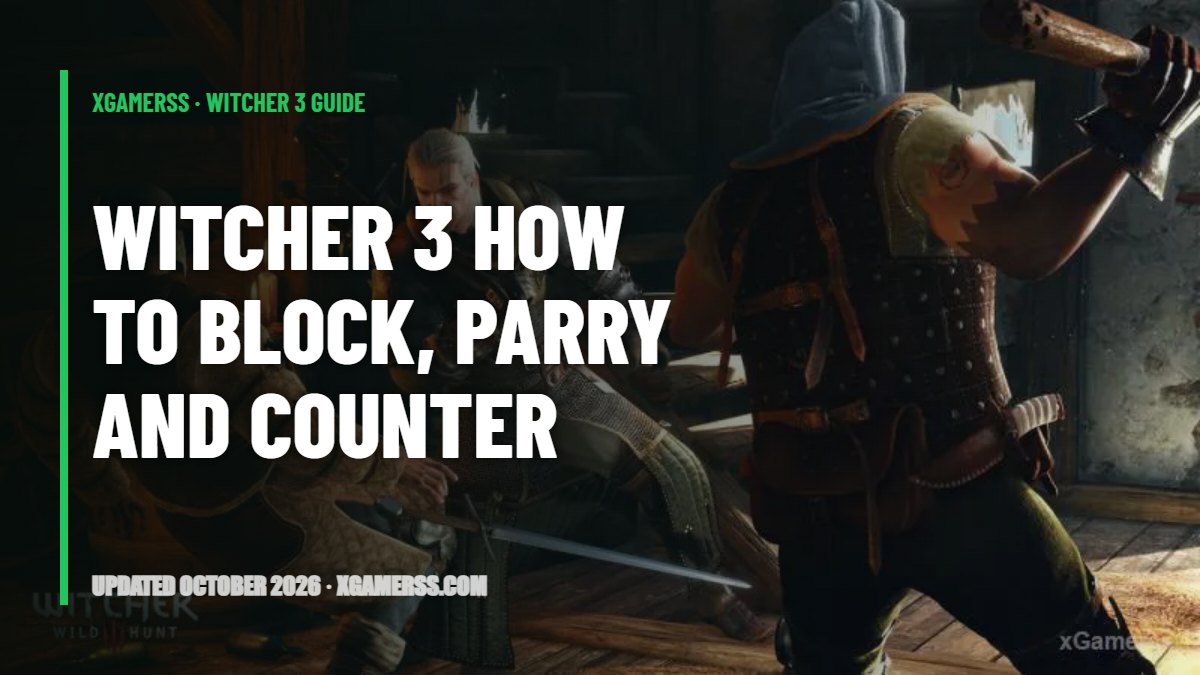
Updated September 27, 2026. To block in The Witcher 3, hold the guard button: right mouse button on PC, L2 on PlayStation, LT on Xbox and ZL on Switch. Holding it blocks, while a quick tap just before an enemy's weapon connects turns the block into a counterattack. Blocking is your main tool against human opponents and small monsters. Against large monsters, heavy weapons, charges and leaps, sidestep or roll instead.
Quick answer
Hold RMB / L2 / LT / ZL to parry (block). Tap the same button just before a blow lands to counterattack, which knocks the enemy off balance and opens a free hit. Parries work best against swords, clubs and axes held by humans and against light attacks from small monsters such as drowners and ghouls. Two-handed weapons, large monsters, charges and leaping attacks can't be blocked. Dodge (Alt / Circle / B) or roll (Space / Cross / A) away from those.
This guide covers the default controls, how a plain block differs from a timed counter, which enemies you can safely block, which skills help and where Quen fits in. For a closer look at timing, read our Witcher 3 parry and counterattack guide.
Default Block, Dodge and Roll Controls on Every Platform
Every version of the game uses the same button to guard, parry and counter. The difference between the three is whether you hold the button or tap it. Dodge and roll are separate buttons, and you'll need both whenever blocking isn't an option.
| Action | PC (keyboard/mouse) | PlayStation | Xbox | Switch |
|---|---|---|---|---|
| Block / parry (hold) | Right mouse button | L2 | LT | ZL |
| Counterattack (timed tap) | Right mouse button | L2 | LT | ZL |
| Dodge (short sidestep) | Left Alt | Circle | B | B |
| Roll (combat only) | Space | Cross | A | A |
These are the defaults. PC players can rebind them in the key bindings menu. One quirk to know: Geralt can't counterattack while he's holding something in his left hand, such as a torch. Put the torch away before a fight in a dark cave or crypt.
Blocking vs Parrying vs Counterattacking: How Each Works
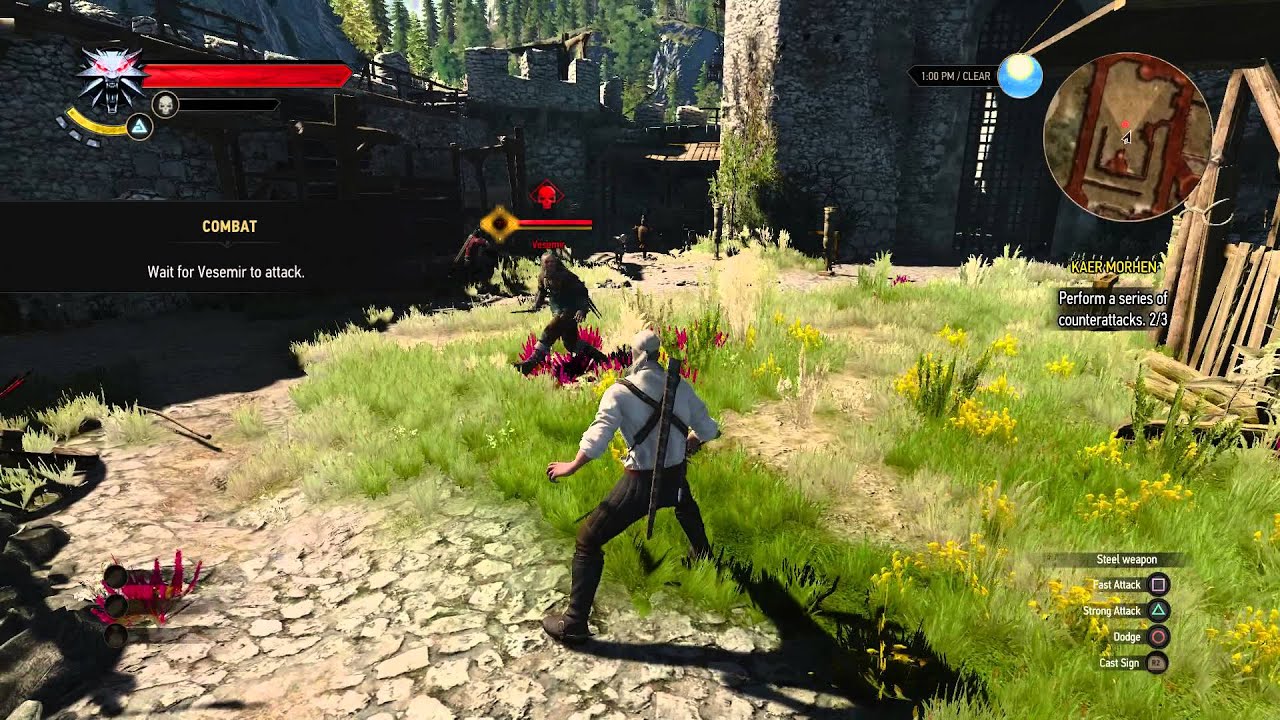
The game uses "parry" for its guard stance, but players often use block, parry and counter to mean different things. Here's how the three actually break down.
Holding guard (block/parry)
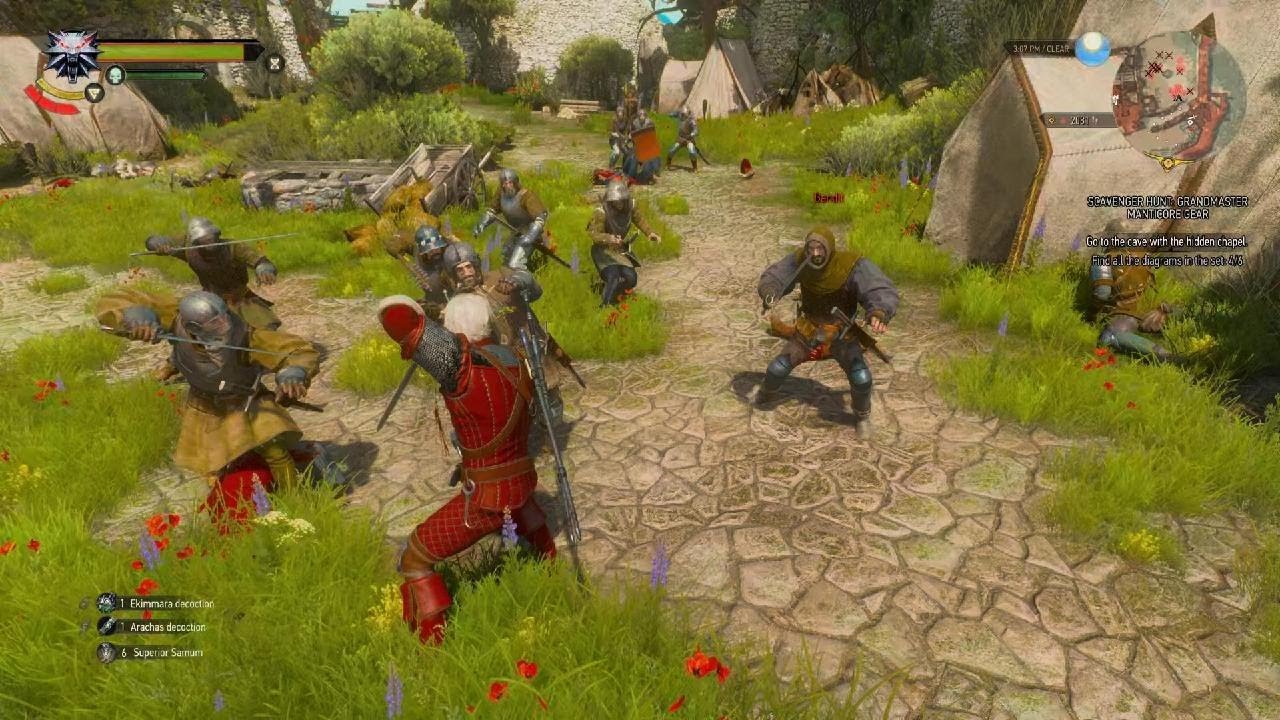
Hold the guard button and Geralt raises his sword. Blockable attacks are parried as long as you keep holding. This is the safe option when you can't read the enemy's timing, for example against a group of bandits swinging at you one after another. The downside is that it's passive. You take no damage, but you don't deal any either.
Timed tap (counterattack)
Tap the guard button, don't hold it, just as the enemy's swing moves from windup into the forward strike. Geralt knocks the blow aside and follows up with a short strike or shove that throws the attacker off balance. That gives you an opening for a free follow-up hit. The window is tight, and pressing during the early part of the windup is the most common mistake. Wait until the weapon actually starts moving toward you.
Which one to use
- One predictable human enemy: counter every swing, then punish with one strong attack or a couple of fast ones.
- Several humans at once: hold guard to get through a combo, then reposition so they're all in front of you.
- Anything big or heavy: don't block at all. Dodge or roll (see the table below).
Does Blocking Use Stamina?
In the unmodded game, basic parries, counters, dodges and rolls don't cost stamina. The popular Nexus Mods "Stamina Based Combat" mod exists precisely because vanilla sets those costs to zero. You can hold guard as long as you like without draining the yellow bar.
Stamina still matters for defense in two ways. Signs cost stamina, including Quen, the game's main defensive Sign. Quen's alternate mode, Active Shield, also drains stamina while you hold it and while it absorbs hits. If you block and dodge and save stamina for Quen, you'll have a shield ready when you do get caught.
If you play with a mod that adds stamina costs, the advice changes a lot: every parry and roll spends stamina. The rest of this guide assumes the unmodded game.
What You Can't Block and When to Dodge or Roll Instead
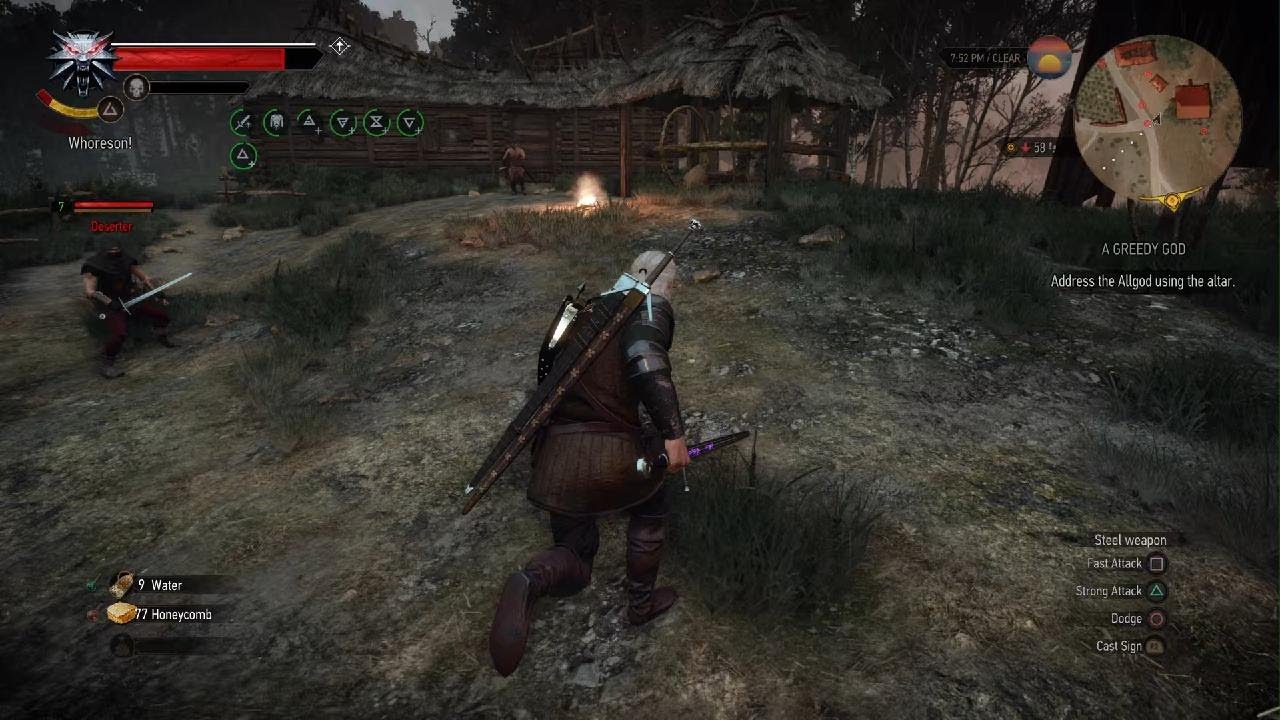
Blocking isn't universal. Guides and player testing agree on the attacks that go straight through your guard or stagger you if you try to block them:
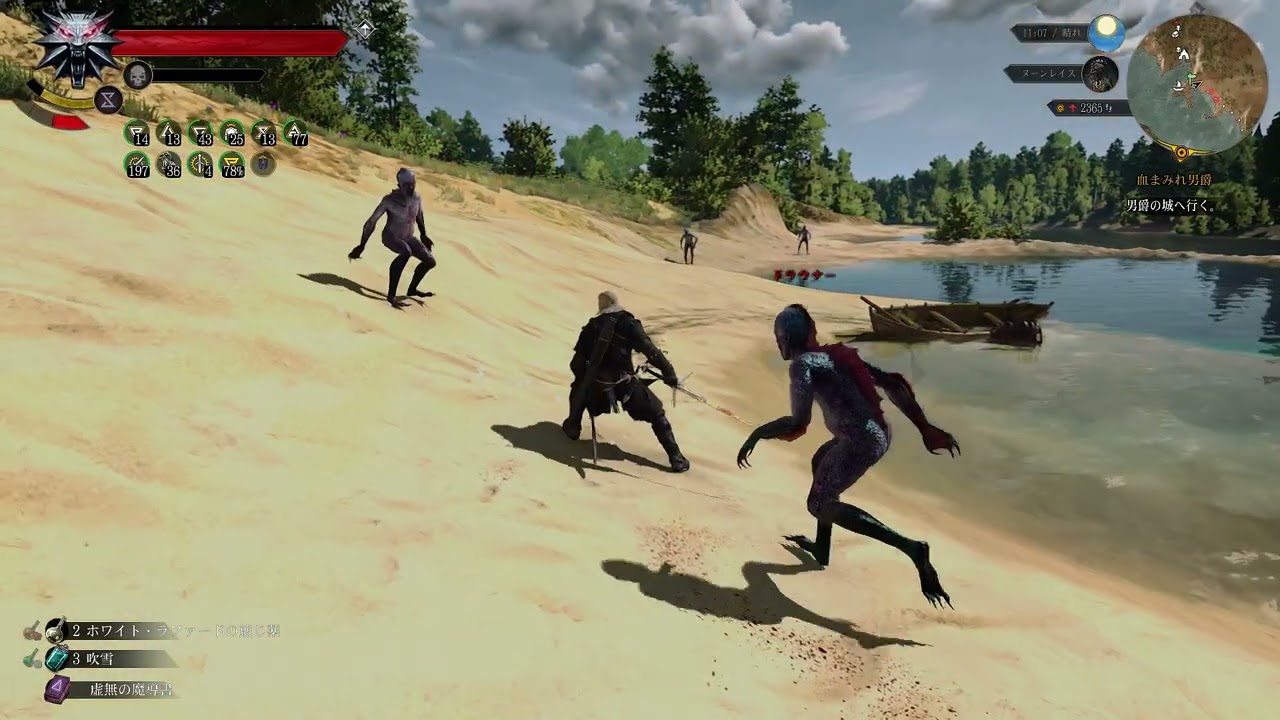
- Large monsters: anything clearly bigger than a human, such as griffins, fiends, trolls and bears.
- Heavy two-handed weapons: large axes, hammers and similar weapons. Blocking these can stagger Geralt.
- Body attacks: charges, tackles and shield bashes.
- Leaping and slam attacks: including the lunging leaps of drowners and other small monsters, even though their regular swipes can be blocked.
Dodge
The dodge is a short, quick sidestep. It keeps you close enough to hit back straight away, which makes it the main defensive move against most monsters. Step sideways across the attack instead of straight backward along its path. Many claw swipes and lunges still reach you if you back away in a straight line.
Roll
The roll covers more ground but takes longer to recover from. Save it for attacks that cover a wide area or need real distance: charges, wide sweeps, shockwaves, or getting out of a crowd that's surrounding you. Rolling repeatedly leaves you far from the enemy and gives up your chance to punish.
Enemy Types: Block, Counter, Dodge or Roll?
This table is a general rule, not frame data. Individual enemies and bosses have their own moves, so pay attention to each enemy's windup the first time you face it.
| Enemy / attack type | Best response | Notes |
|---|---|---|
| Human with sword, club or one-handed axe | Counterattack | The ideal counter target. Tap guard as the swing comes in, then punish. |
| Group of human fighters | Hold guard, then reposition | Keep everyone in front of you. Counter when a single attacker commits. |
| Two-handed axe, hammer or spear user | Dodge | Heavy attacks can't be parried and can stagger you. Sidestep, then hit back. |
| Shield bash / charging soldier | Dodge or roll | Body attacks go through your guard. |
| Archers and crossbowmen | Block (with Arrow Deflection) | Without the skill, close the distance or use Quen. |
| Drowners, ghouls, nekkers (basic swipes) | Block or dodge | Light attacks are blockable, but they swarm and surround you, so dodging is often safer. |
| Small-monster leaps and pounces | Dodge | Leaping attacks can't be parried. |
| Wolves and wild dogs | Block or dodge | Blockable, but they come at you from several directions. |
| Large monsters (griffins, fiends, trolls, bears) | Dodge; roll from big swings | Don't try to block. Sidestep, then strike from the flank. |
| Charges, shockwaves, wide area attacks | Roll | You need the roll's extra distance to get clear. |
In short, counter humans and dodge monsters. The main exception is heavily armed soldiers, who you should treat like monsters.
Skills That Improve Your Defense
The skills that affect blocking are in the Combat tree's Defense branch. Effects below match the in-game descriptions recorded on the Fextralife Witcher 3 wiki.
Arrow Deflection (Defense, tier 1)
- Rank 1: deflect arrows while parrying.
- Rank 2: perfectly timed parries reflect arrows back at the attacker.
- Rank 3: perfectly timed parries reflect arrows back and deal double damage.
Arrow Deflection is the skill some guides call "Deflection." It's the only way to block arrows, and it makes archer-heavy bandit camps much easier to deal with.
Fleet Footed (Defense, tier 2)
Fleet Footed reduces damage from hits you take while dodging, by 20% per rank up to 100% at rank 5. It doesn't affect blocking, but it covers the moments when you have to dodge an attack you can't block.
Counterattack (Defense, tier 3)
After a successful counterattack, your next attack does extra damage. At higher ranks that attack is also a critical hit, with a chance of knocking the enemy down that depends on how many Adrenaline Points you have. Some players on the wiki say the damage bonus feels smaller than the description suggests. The guaranteed crit and knockdown chance are still very strong against human enemies.
What about Lightning Reflexes?
Lightning Reflexes is often mentioned in defense guides, but it has nothing to do with blocking. It slows time further while you aim the crossbow (by 15%, 30% or 45% extra by rank). It's useful against flying enemies, but don't spend points on it for parrying. For help planning skill points, see our best early-game Witcher 3 skills.
Quen: The Defensive Alternative to Blocking
Quen creates a shield that absorbs damage. Cast it before a fight or between enemy attacks, and the first hit you'd otherwise take goes into the shield. The shield gets stronger as your Sign intensity goes up. That makes Quen the answer to exactly the attacks you can't block. If a monster's leap catches you mid-dodge, the shield takes the damage instead of Geralt.
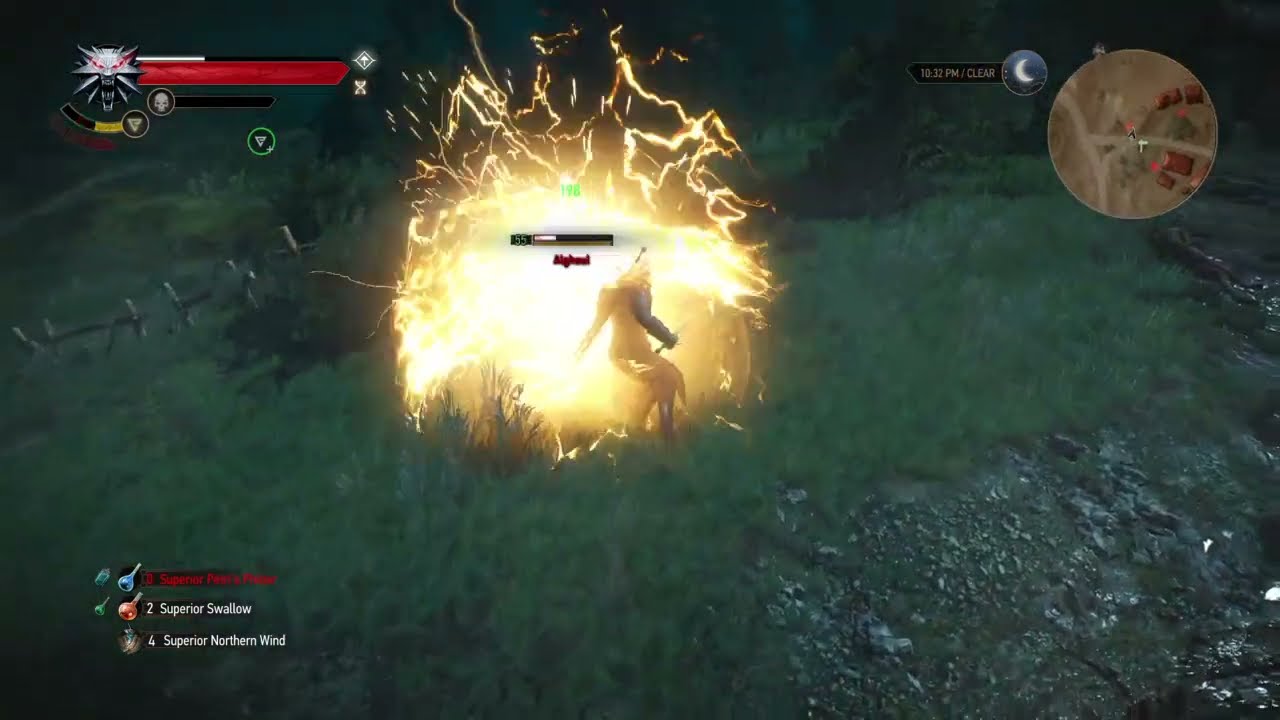
The Active Shield skill unlocks Quen's alternate mode, a bubble you maintain around Geralt. Holding it and absorbing hits drains stamina, and you can't move while it's up. Damage it absorbs restores Vitality, though. Related skills include Exploding Shield, which pushes enemies back when the shield breaks, and Quen Discharge, which reflects part of the absorbed damage back at the attacker.
Quen works best alongside blocking, not as a replacement. Keep Quen up for mistakes, counter humans, dodge monsters, and recast whenever the shield breaks and your stamina has refilled.
Difficulty Settings and Blocking
The Witcher 3 has four difficulty settings: Just the Story, Story and Sword, Blood and Broken Bones!, and Death March!. Mistakes cost more the higher you go. According to Gamer Guides' breakdown, Death March increases enemy damage by 230% and enemy health by 80%. It also stops meditation from restoring Vitality, so every hit you take stays with you until you heal.
- Lower difficulties: holding guard and trading hits works fine. This is a good place to learn counter timing.
- Blood and Broken Bones! and Death March!: a misread block against a heavy attack can take a big chunk of health. Only block attacks you know are blockable, dodge everything else, and keep Quen up all the time.
- Healing on Death March: because meditation won't heal you, avoiding damage in the first place (counters, Quen Active Shield, Fleet Footed) is worth more than on lower settings.
The Witcher 3 Remastered upgrade is due on September 29, 2026. As of this update, CD Projekt Red hasn't announced any changes to parry or counter mechanics. We'll update this guide if patch notes change them.
Practical Tips to Block More Effectively
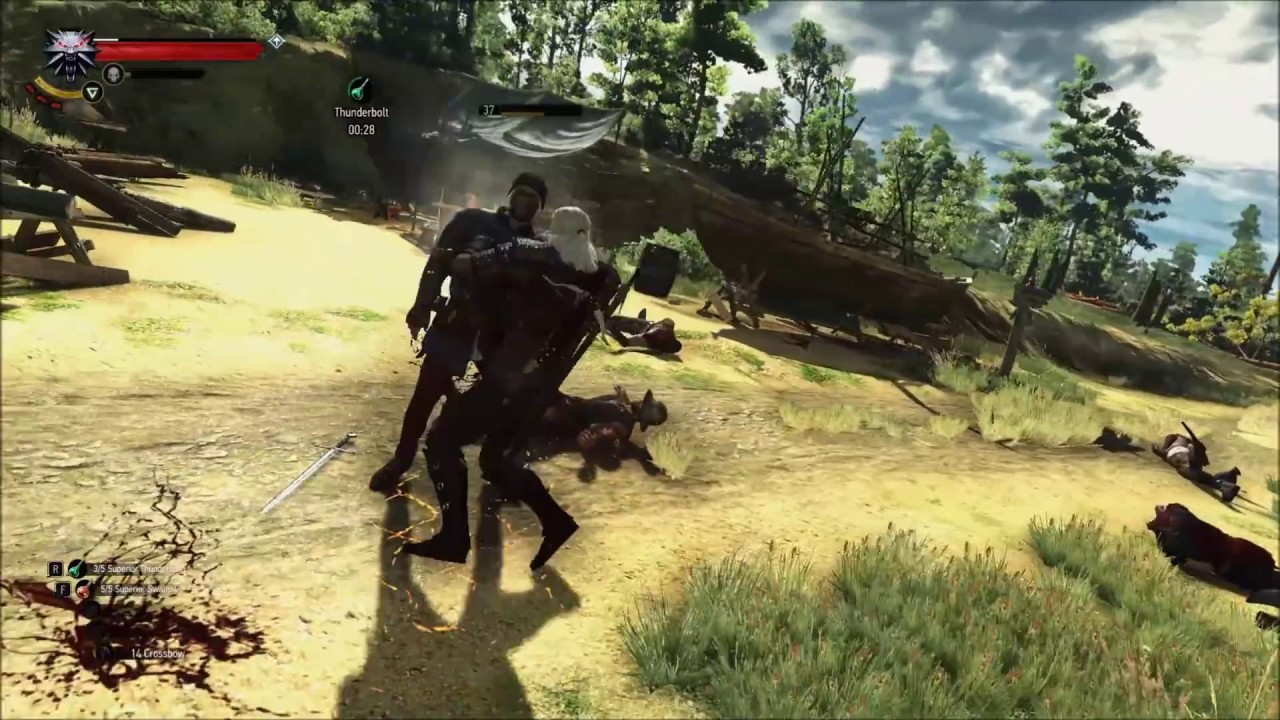
- Lock on to your target. Parries and counters are easier to aim when you're locked on to the enemy who's attacking.
- Watch the weapon, not the health bar. Counter when the swing starts moving forward, not during the windup.
- Don't hold guard forever. Blocking is safe but deals no damage. Switch to counters once you know an enemy's rhythm.
- Keep enemies in front of you. Move so that groups stay in your field of view instead of getting behind you.
- Put the torch away. You can't counter with something in your left hand.
- Be ready to dodge. The moment you see a two-handed weapon, a charge or a leap, drop the block and move.
For more on spacing, Signs and attack types, see our Witcher 3 combat tips for beginners. If you're just starting out, our Witcher 3 beginner's guide covers the first things to do in White Orchard.
Frequently Asked Questions
QHow do you block in The Witcher 3?
Hold the right mouse button on PC, L2 on PlayStation, LT on Xbox or ZL on Switch. Geralt raises his guard and parries blockable attacks for as long as you hold it.
QWhat is the difference between a parry and a counterattack?
A parry is holding the guard button to absorb a blow. A counterattack is a well-timed tap of the same button just before the hit lands. It knocks the enemy off balance and gives you a free follow-up attack.
QWhy can't I parry monsters in The Witcher 3?
Large monsters, leaping attacks, charges and heavy two-handed weapons can't be parried. You can block the light swipes of small monsters like drowners and ghouls, but most monster fights are won by dodging.
QDoes blocking drain stamina in The Witcher 3?
Not in the unmodded game. Parries, counters, dodges and rolls are free. Stamina goes to Signs, and Quen's Active Shield mode drains stamina while you hold it.
QCan you block arrows in The Witcher 3?
Yes, with the Arrow Deflection skill in the Combat tree's Defense branch. Rank 1 deflects arrows while parrying, rank 2 reflects them with perfectly timed parries, and rank 3 makes reflected arrows deal double damage.
For every Witcher 3 guide in one place, visit our Witcher 3 hub.
Sources checked on September 27, 2026 against the Fextralife Witcher 3 wiki (skills, Quen, combat), Game8's Witcher 3 controls guide, Gamer Guides' Death March breakdown and the Stamina Based Combat mod page on Nexus Mods.
Kai Mercer covers game news, free games, release calendars and guides for xGamerss.
More from Kai Mercer →
Comments (0)
No comments yet. Be the first!
Sign in or create an account to earn karma — or comment as a guest.